Green Car Logo: Crafting an Eco-Conscious Brand Identity
In a marketplace saturated with brands vying for attention, visual identity is your first and most powerful handshake. For businesses rooted in sustainability, environmental services, or forward-thinking technology, that handshake needs to communicate a specific set of values instantly. The Green Car Logo asset is a direct answer to this challenge. It’s not merely a graphic; it’s a concise visual narrative combining the universal symbol of transportation with the emblem of nature—a leaf—to signify a commitment to eco-friendly progress. This design asset is built for creators who need to project modernity, responsibility, and clarity without a lengthy explanation.
Anatomy of an Eco-Friendly Emblem
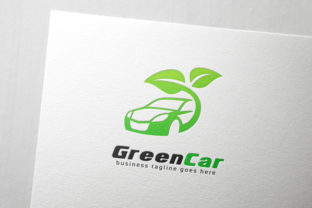
At its core, the Green Car Logo is a study in symbolic fusion. The silhouette of a car, often rendered in a sleek, contemporary style, is integrated with organic leaf elements. This might manifest as leaves forming part of the vehicle’s body, a leaf replacing the traditional grill, or a leaf motif trailing behind the car as if it were a breath of fresh air. The color palette is inherently green, but within that spectrum lies significant meaning. A deep forest green conveys stability and tradition, while a vibrant lime green suggests innovation and energy. This careful balance ensures the logo feels both grounded and progressive.
The personality of this logo style is approachable yet professional. It avoids overly aggressive or complex lines, favoring smooth curves and a clean aesthetic. This makes it highly versatile. It can represent an electric vehicle startup, a sustainable logistics company, a green energy consultancy, or even an environmental blog focused on transportation. The design communicates a clear message: efficiency and ecology are not mutually exclusive. It’s a modern typography solution for a modern problem, using the principles of effective logo design to build immediate brand recognition.
Strategic Applications Across Industries
The true value of a well-designed asset like the Green Car Logo is its adaptability. For entrepreneurs and small business owners, it serves as the cornerstone of a brand identity. Imagine it on a business card for a solar panel installer, the masthead of a website for an electric bike rental service, or the packaging design for a line of organic car care products. In each case, the logo instantly aligns the business with eco-conscious values, attracting a specific audience that prioritizes sustainability.
For designers and content creators, this asset is a practical tool. A marketing agency can use it in social media graphics for a client launching a carbon-neutral delivery service. A blogger writing about green technology can incorporate it into their editorial design, using it as a recurring visual motif to reinforce their niche. The included file formats—AI, EPS, PSD—ensure seamless integration into professional workflows, whether you’re working in Adobe Illustrator for print materials or Photoshop for digital composites. The 100% vector format means it scales flawlessly from a tiny favicon to a large trade show banner, maintaining crisp integrity at every size.
Influencing Perception and Engagement
Visual elements like the Green Car Logo do more than decorate; they guide perception and structure information. A strong, simple logo establishes a clear visual hierarchy in a design. It becomes the anchor point from which other elements—headlines, body copy, calls to action—radiate. This consistency is vital for building brand recognition. When a customer sees the same emblem on a website, an invoice, and a social media ad, it reinforces trust and professionalism. The logo’s inherent meaning, marrying the vehicle and the leaf, does a significant amount of the brand storytelling work upfront, allowing other copy to focus on specifics rather than establishing core identity.
Engagement is also affected by this clarity. In the fast-scroll environment of social media or the quick-scan of a crowded website, a recognizable and meaningful logo can stop a user for that crucial extra second. It signals relevance. For a brand targeting environmentally aware adults, the Green Car Logo acts as a visual shorthand for shared values, fostering a quicker and deeper connection than a generic symbol might. It’s a creative font for the eyes—a display font in graphic form that commands attention and communicates a specific tone.
Practical Guidance for Implementation
Choosing to use the Green Car Logo requires thoughtful evaluation. First, assess the project’s core message. Does it align with transportation, sustainability, or innovation? If the answer is a clear yes, it’s a strong candidate. Next, consider the existing or planned brand identity. The logo should complement, not clash with, your chosen color schemes and typefaces. A sans serif font pair, for instance, would enhance its modern, clean aesthetic, while a serif font might lend it a more established, authoritative feel. Always test font pairings and color applications in context.
The asset’s technical specifications are designed for ease of use. The inclusion of AI, EPS, and PSD files covers the primary needs of designers across print and digital. The CMYK color mode is essential for professional printing, ensuring the greens reproduce accurately on physical materials. The fully editable vector paths allow for customization—adjusting the leaf shape, modifying the car’s lines, or changing colors to match a specific brand palette. The free font links in the help file are a practical bonus, offering a starting point for complementary typography without additional cost.
For commercial use, the licensing terms are a critical consideration. Ensure the license covers your intended applications, whether for a single client project, multiple products, or merchandise. A premium font or design asset often comes with clear commercial rights, but due diligence is necessary to avoid future legal complications. By treating the Green Car Logo as a strategic component of your brand identity rather than just a decorative element, you can leverage its full potential to create a coherent, professional, and resonant visual presence in the eco-friendly market space.